A conventional mortgage is built around a simple idea: the lender gives you money, and the house you are buying secures the loan. With a custom home, that house does not exist yet. The lender is financing a vacant lot, a set of drawings, and a builder’s promise, which is why construction financing works differently and asks more of you upfront.
This guide explains how construction loans are structured, what lenders typically require, how money moves during the build, and the questions to settle with your lender before you sign a contract with a builder.
How a Construction Loan Differs From a Mortgage
A construction loan is short-term financing that pays for the building of a home in stages. Instead of releasing the full amount at closing, the lender pays out funds in installments, called draws, as work is completed and verified.
During construction you typically pay interest only on the money that has been drawn so far. Early in the project, when only the foundation is in, your payment is small. By the time cabinets and flooring are installed, most of the loan has been disbursed and the payment is larger. Once the home is finished and receives its certificate of occupancy, the construction debt is paid off by a permanent mortgage.
That last step, moving from construction financing to a permanent mortgage, is where the two main loan structures differ.
One-Time Close vs. Two-Time Close
Construction-to-permanent (one-time close)
A construction-to-permanent loan combines the construction financing and the long-term mortgage into a single loan with a single closing. You qualify once, pay one set of closing costs, and the loan converts automatically to a standard mortgage when the house is complete.
The main appeal is certainty. Your permanent terms are set at the start, so you are not exposed to a change in your income, credit, or the rate market during a build that may take a year or more. You also avoid paying closing costs twice. Conventional versions commonly require about 20 percent down, a credit score around 680, and a debt-to-income ratio at or below 45 percent, though individual lenders set their own thresholds.
Stand-alone construction loan (two-time close)
A two-time close uses one loan for construction and a separate mortgage at the end. You close twice and pay closing costs twice.
This structure can make sense if you expect rates to fall during the build, if you want to shop for the best permanent mortgage once the house is finished, or if you plan to sell an existing home and use the proceeds to reduce the final mortgage. The trade-off is that you must qualify again at the end. If your income, debt, or credit changes during construction, the permanent financing could become harder to secure.
Neither structure is universally better. The right choice depends on how much flexibility you want and how much rate and qualification risk you are willing to carry.
What Lenders Usually Require
Construction lenders evaluate both you and the project. Expect more documentation than you needed for a standard home purchase.
Down payment
Conventional construction loans often require 20 percent or more of the total project cost, which includes land and construction. Some lenders offer lower down payment options for well-qualified borrowers, and government-backed programs can reduce the requirement substantially. FHA one-time close loans allow lower down payments for eligible borrowers, VA construction loans can require no down payment for eligible veterans, and USDA offers a one-time close option in qualifying rural areas. The number of lenders actively offering these programs is smaller than for standard purchase loans, so start that search early.
Land equity
If you already own your lot, its value can usually count toward your down payment. A family that bought land outright several years ago may find that the lot covers much or all of the required equity. If you still owe money on the land, the construction loan generally pays off that balance at closing.
Credit, income, and reserves
Lenders look for solid credit, stable income, and a manageable debt-to-income ratio calculated against the eventual permanent payment. Many also require cash reserves after closing, often several months of projected mortgage payments. If you will still be paying a mortgage or rent on your current home during construction, the lender will count that payment too.
Project documentation
The lender needs to understand exactly what is being built. That usually means a signed construction contract, full plans and specifications, an itemized budget, a construction schedule, and proof of builder insurance. The appraiser values the home based on those documents, so the appraisal is completed “subject to” construction, meaning it reflects the finished house rather than the empty lot.
Builder approval
Most lenders approve the builder as well as the borrower. They may ask for the builder’s license or registration, insurance certificates, references, and financial information. A builder who has worked with construction lenders before can usually provide this package quickly. Owner-builder arrangements, where the homeowner acts as their own general contractor, are difficult to finance and many lenders will not consider them.
How the Draw Schedule Works
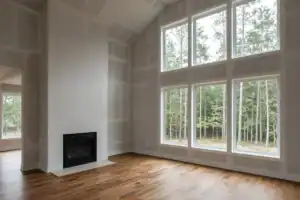
The draw schedule ties loan disbursements to construction progress. A typical schedule for a Central Ohio custom home releases funds at milestones such as foundation completion, framing, mechanical rough-ins, exterior dry-in, interior finishes, and final completion.
Before each draw, the lender usually sends an inspector to confirm the work has been done. Once verified, funds are released to the builder or, in some cases, to you for payment to the builder. This protects you as much as it protects the lender. Money only goes out for work that is actually in place.
A well-run project keeps the draw schedule and the construction schedule closely aligned. If inspections lag or paperwork stalls, subcontractors wait for payment and the schedule can slip. It is worth asking your builder how they coordinate draw requests and how quickly your lender typically schedules inspections. Our post on the custom home building process in Central Ohio explains the construction phases that these draws follow.
The Appraisal Gap
Occasionally an appraisal comes in below the total project cost. This happens more often with highly customized homes, because the appraiser relies on comparable sales and there may be few homes nearby with similar features or finishes.
If the appraisal falls short, the lender will finance based on the lower value, and you will need to cover the difference in cash, reduce the scope, or appeal the appraisal with additional comparable sales. Reviewing your plan and budget against recent local sales before you finalize the design can reduce the risk of a gap. A builder familiar with neighborhoods like Hilliard or Lewis Center can often tell you where a particular feature set may outrun local values.
Budgeting for Costs the Loan May Not Cover
A construction loan pays for construction. Several costs often fall outside it or need to be planned separately.
Interest payments during the build come from your monthly budget. If you are carrying a current mortgage or paying rent at the same time, that double housing cost can last a year or longer. Closing costs, appraisal fees, inspection fees, and title charges usually come due at closing. Items such as furniture, window treatments, and landscaping beyond what the contract includes generally cannot be financed through the construction loan.
Change orders deserve particular attention. If you upgrade a selection or add scope after the loan is set, the lender may require you to pay the difference in cash before the next draw. Making as many decisions as possible before closing keeps your financing aligned with the actual house. Our article on what drives the cost of a custom home covers how allowances and selections affect your total.
Construction Loan vs. Mortgage: A Side-by-Side View
| Construction loan | Standard mortgage | |
|---|---|---|
| Collateral at closing | Land plus plans | Existing house |
| How funds are released | In draws as work is verified | All at closing |
| Payments during the loan | Typically interest only on drawn funds | Principal and interest |
| Typical term | About 12 to 18 months for the construction phase | 15 to 30 years |
| Down payment | Often 20 percent or more for conventional loans | As low as 3 to 5 percent for many buyers |
| Builder review | Usually required | Not applicable |
When to Talk to a Lender
Earlier than most people expect. A lender conversation before you buy land or start design tells you how much you can borrow, how much cash you will need, and which loan structure fits your situation. That number should shape the design, rather than the design shaping the loan request.
Not every bank or credit union offers construction lending, and those that do vary in how they handle draws, inspections, and rate locks. Local lenders who regularly finance custom homes in Central Ohio tend to understand regional building practices and inspection schedules, which can make the process smoother. It is reasonable to speak with two or three lenders and compare not only rates but also draw procedures, inspection turnaround, and how they handle change orders.
Frequently Asked Questions
How much down payment do I need for a construction loan in Ohio?
Conventional construction loans often require about 20 percent of the total project cost, including land. Some lenders accept less for strong borrowers, and FHA, VA, and USDA one-time close programs can reduce the requirement significantly for eligible buyers.
Can I use my land as a down payment?
Usually, yes. If you own the lot, lenders generally count its appraised value as equity toward your down payment. If you still owe money on the land, the construction loan typically pays off that balance at closing.
What is a construction-to-permanent loan?
It is a single loan that finances construction and then converts to a long-term mortgage when the home is complete. You close once, pay one set of closing costs, and lock in your permanent terms at the start.
Do I make payments during construction?
Yes. Most construction loans require interest-only payments on the amount drawn so far. Payments start small and increase as more of the loan is disbursed.
Can I act as my own builder with a construction loan?
It is difficult. Most lenders require a licensed, insured builder with a track record and will not finance owner-builder projects, or will do so only with significant experience and documentation.
Plan the Financing and the House Together
Financing decisions and design decisions affect each other at every step. StoneBrook regularly prepares lender-ready proposals, plans, and schedules for families building in Westerville, Gahanna, Grove City, and across Central Ohio, and coordinates draw inspections with your lender as construction moves forward. Review our custom home FAQs for more on budgets and financing, or reach out to our team to talk through your plans before you meet with a lender.